What Separates Seven Figure Amazon Wholesale Sellers From Everyone Else
The gap between a wholesale seller doing five figures a year and one doing seven figures is rarely a difference in intelligence, effort, or even starting capital. It is a difference in which specific habits got built into the operation early, and which ones never did. Here is what the pattern actually looks like across sellers who make that jump.
They treat sourcing as a system, not a series of decisions
Smaller sellers tend to source reactively, chasing whatever deal or product idea comes up next. Seven figure sellers run sourcing on a defined, repeatable cadence, applying the same Keepa based evaluation framework, covered in our reading Keepa charts guide, to every candidate product, every time, rather than relying on gut feel that varies from one sourcing session to the next.
They run three or more active supplier relationships, never one
A single supplier relationship is a single point of failure. Sellers who reach real scale have consistently diversified across three to six active distributors, following the methods covered in our guide to finding wholesale suppliers, which protects revenue against a single price increase, stock shortage, or change in one supplier's terms.
They know their real margin on every single SKU, not just the winners
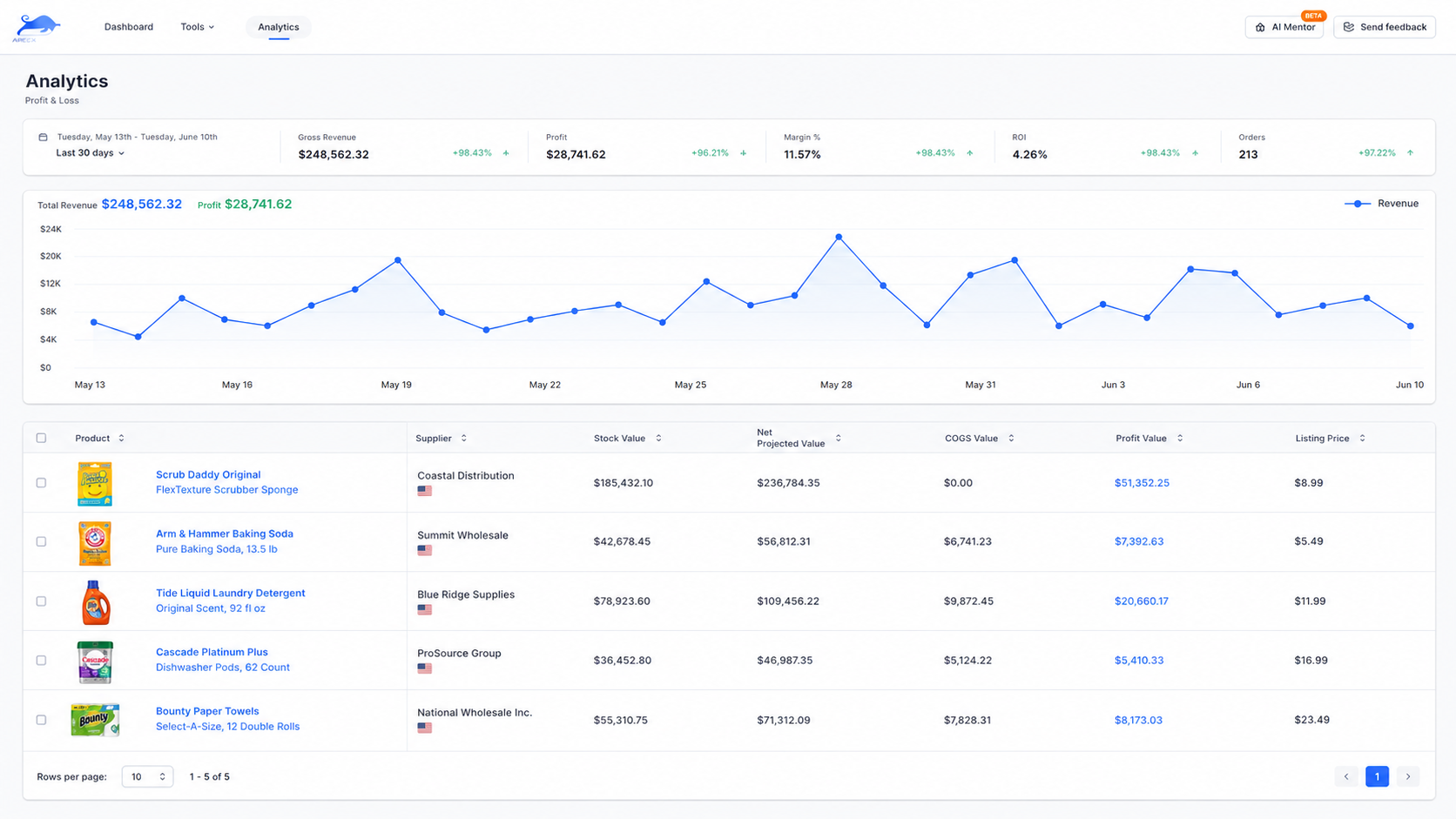
Smaller operations often only calculate real landed cost margin on products that already feel important. Seven figure sellers apply the full landed cost calculation, covered in our profit margins guide, to every SKU without exception, which is what catches a slowly eroding margin on a previously reliable product before it becomes a real loss.
They negotiate proactively instead of accepting list price indefinitely
This is one of the clearest, most consistent patterns among larger sellers: they revisit supplier terms proactively once they have order history, rather than waiting for better pricing to be offered unprompted, following the approach covered in our distributor negotiation guide. Over hundreds of reorders a year, even a modest negotiated discount compounds into a meaningfully different margin than a seller who never asked.
They build compliance into the process instead of reacting to problems
Sellers who reach real scale without a suspension derailing their progress are not lucky. They follow the specific documentation and review compliance habits covered in our suspension prevention checklist as a default part of how every purchase order and every review request is handled, not as something they think about only after receiving a warning.
They stop doing repetitive tasks by hand well before it becomes painful
Ready to put this into practice?
Apex Black, Blue, Green & Red connect sourcing, purchasing, and profit tracking into one suite. Start your 7-day free trial, no card charged until it ends.
Start Free TrialA common mistake at the mid stage is waiting until manual tracking is genuinely breaking down before adopting real tooling. Sellers who scale fastest automate review requests, margin calculation, and restock alerts, covered in our wholesale automation guide, proactively, freeing up the hours that would otherwise go to repetitive tracking for sourcing new products and negotiating better terms instead.
They reinvest reorders faster than they reinvest new products
New sellers often chase novelty, constantly hunting for the next new product idea. Seven figure sellers disproportionately reinvest capital into deeper reorders of SKUs that are already proven, since a proven product's demand risk is already solved, while a new product's is not. This single allocation habit, doubling down on what already works before chasing what might, is one of the most consistent differences between the two groups.
The common thread
None of these habits are secret or complicated individually. What separates the sellers who reach seven figures is that they build every one of these habits into a connected system early, rather than relying on personal discipline to remember all of them manually across a growing number of suppliers and SKUs. That is precisely the gap Apex Black, Blue, Green, and Red are built to close, and it is why the trial is structured to get a new seller operating this way from the very first purchase order rather than retrofitting these habits after the business has already outgrown a spreadsheet.
Frequently asked questions about scaling an Amazon wholesale business
How long does it typically take to reach seven figures in Amazon wholesale?
This varies enormously based on starting capital and category, but sellers who build the habits above from the start tend to compound noticeably faster than sellers who adopt them only after hitting operational pain, since every month spent without proper tracking is a month of margin and reorder opportunities that were not fully captured.
Do seven figure sellers still do their own sourcing?
Many do, especially for new category exploration, though the reorder decisions on proven SKUs are often the most systematized part of the business, requiring far less hands on time per dollar of revenue than the initial sourcing did.
Is it possible to reach this scale with just one or two product categories?
Yes, and it is often more efficient than spreading thin across many categories early. Deep expertise and strong supplier relationships within one or two well chosen categories, covered in our best wholesale categories guide, frequently outperforms shallow presence across many.
Ready to put this into practice?
Apex Black, Blue, Green & Red connect sourcing, purchasing, and profit tracking into one suite. Start your 7-day free trial, no card charged until it ends.
Start Free Trial