Amazon Wholesale Profit Margins in 2026: What's Actually Realistic
Margin is the number that actually decides whether a wholesale business works, and it is also the number most new sellers get wrong, usually by pricing off unit cost alone and forgetting everything else that eats into it between the purchase order and the sale. Here is what is realistic in 2026, what happens when you ignore it, and how to calculate yours honestly.
What happens when you ignore your real margin
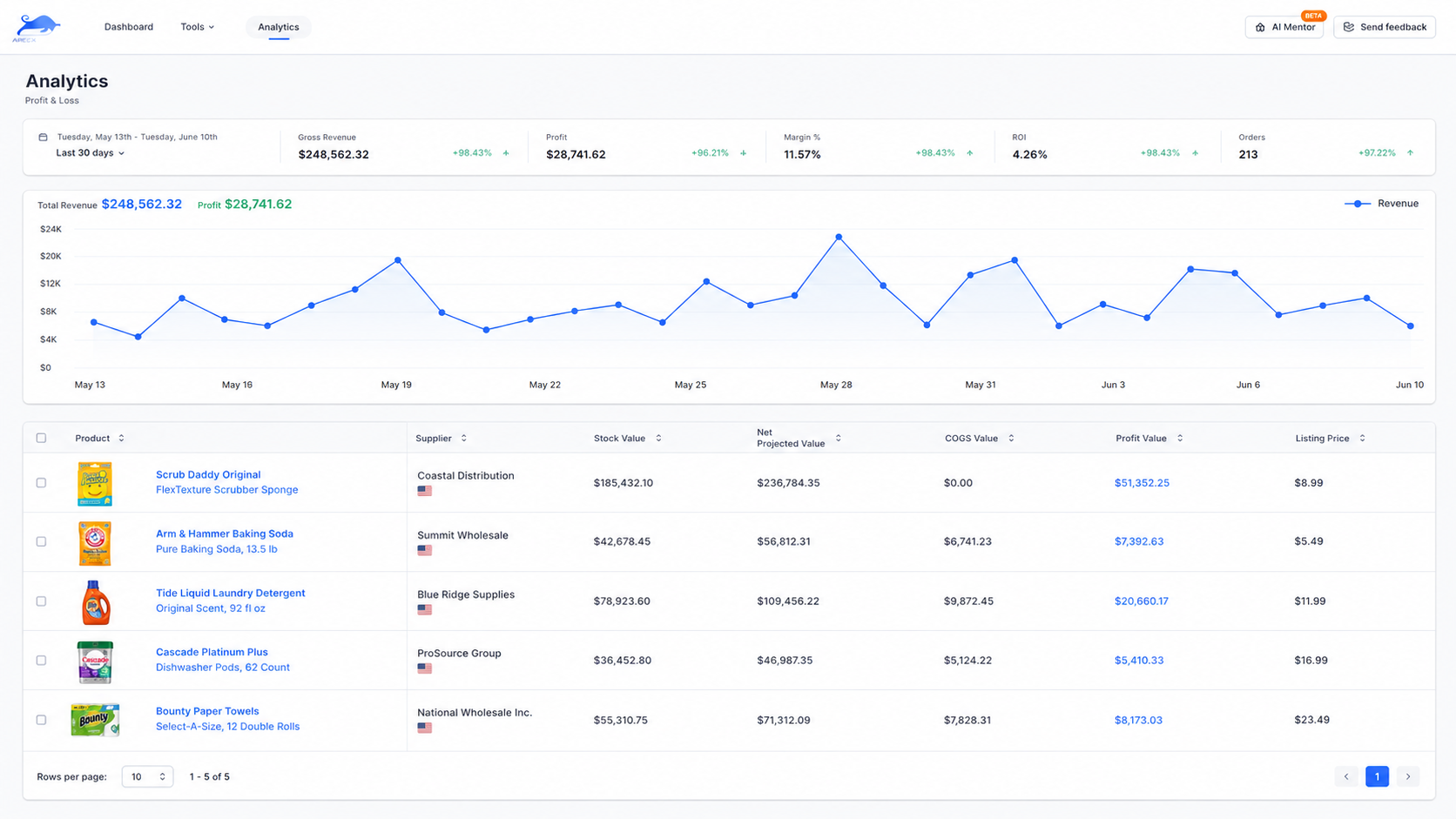
A business that does not track true landed cost margin does not fail dramatically. It fails quietly. Revenue looks healthy on the Seller Central dashboard because gross sales are climbing, but net profit is not climbing at the same rate, because storage fees, returns, and a slowly rising ad spend are all eating into a margin nobody is actually measuring. Sellers in this position often do not realize how thin things have gotten until a slow month exposes it, by which point fixing it means untangling months of pricing and sourcing decisions made on incomplete information. The fix is not complicated. It is simply refusing to treat margin as a rough mental estimate and instead tracking it as a real number, per SKU, updated as costs change.
How margin compares across business models
| Model | Typical gross margin | Typical net margin | Why |
|---|---|---|---|
| Wholesale | 30%+ target | 10 to 20% | Proven demand, thinner per unit margin, but repeatable volume |
| Private Label | 40 to 60%+ | 20 to 35% | Full brand and pricing control, higher upside, higher upfront risk |
| Retail or Online Arbitrage | 20 to 40% | 10 to 20% | Low upfront cost, harder to scale, sourcing is time intensive |
We go deeper on which model actually fits your situation in our wholesale versus private label versus arbitrage comparison.
How to actually calculate your real margin
Real margin is the sale price minus total landed cost, divided by sale price. Total landed cost is everything it costs to get one unit sold and delivered, not just what the supplier charged you.
- 1Start with the wholesale unit cost from your supplier invoice.
- 2Add inbound shipping cost, divided across the units in that shipment.
- 3Add prep center fees per unit, including receiving, labeling, and poly bagging.
- 4Add Amazon's referral fee, typically 8 to 15 percent of sale price depending on category, and the FBA fulfillment fee.
- 5Subtract that total landed cost from your sale price, then divide by sale price for your real margin percentage.
We walk through a full worked example with real numbers in our purchase order workflow guide. It is worth running before every purchase order, not just once per product.
The margin killers nobody budgets for
- Long term storage fees. Inventory that sits past 365 days incurs steep additional charges, quietly turning a healthy margin negative.
- Returns and refunds. Factor an expected return rate into your margin model, especially for apparel adjacent or fragile categories.
- Ad spend. If you are running PPC to support a listing, that cost has to come out of margin somewhere.
- Price wars. A Keepa chart showing a stable buy box price today does not guarantee it stays stable through your inventory's full sell through window.
- The software stack itself. Subscriptions for sourcing, analytics, and inventory tools are a real recurring cost most sellers do not line item until it is too late. We broke down what a typical stack actually costs in our software cost comparison.
Ready to put this into practice?
Apex Black, Blue, Green & Red connect sourcing, purchasing, and profit tracking into one suite. Start your 7-day free trial, no card charged until it ends.
Start Free Trial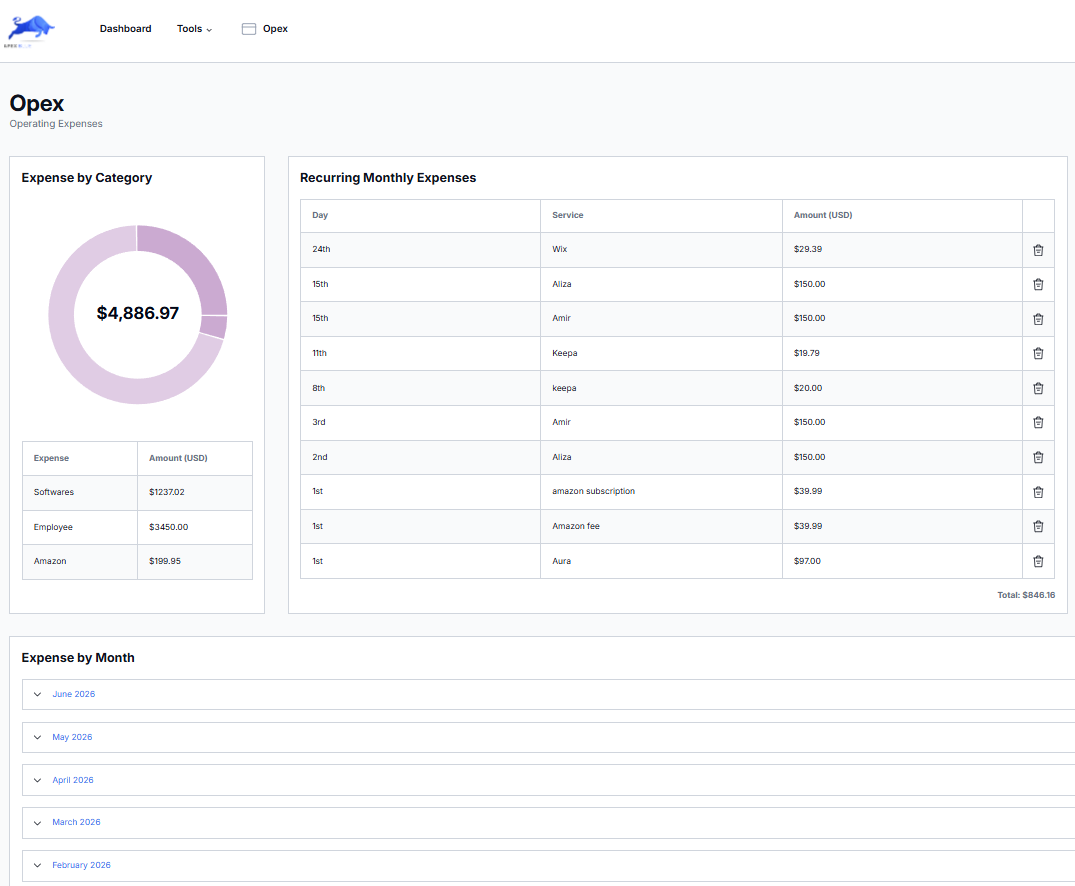
How top sellers protect margin as they scale
The sellers who maintain healthy margin at real volume share a specific habit: they review margin per SKU on a fixed schedule rather than only when something feels off. A weekly or biweekly pass through the full product list, checking current buy box price against the price assumed at purchase order time, catches a slow price war or a rising Amazon fee before it has eaten a full quarter of profit. They also reorder in smaller, more frequent batches once a SKU is proven, rather than one large order, which limits exposure if the market shifts mid cycle. And they treat a shrinking margin as a signal to investigate immediately, not a trend to watch for a few more months, because by the time a margin trend is obvious in hindsight it has usually already cost real money.
When a good deal is not
A product priced well below competitors on the buy box can look like an obvious win until you run the full landed cost math and realize the margin is thinner than a product at a higher unit cost but lower fees or shipping weight. Always compare full landed cost margin, never just unit cost against sale price. It is the difference between a spreadsheet that looks good and a business that actually is.
Gross margin versus net margin: why the distinction matters
Gross margin measures the gap between sale price and product cost alone, before Amazon fees, shipping, and other operating costs are subtracted. Net margin subtracts everything, and it is the number that actually tells you whether the business is profitable. A product can have a healthy looking 40 percent gross margin and still be barely profitable once referral fees, fulfillment fees, storage, and software costs are counted, which is exactly the trap this guide's benchmarks are designed to help you avoid. Whenever a margin number is quoted, including by a supplier or in a sourcing tool, confirm whether it is gross or net before using it to make a purchase order decision.
Frequently asked questions about Amazon wholesale margins
What is a good ROI for Amazon wholesale products?
Many experienced wholesale sourcers use a minimum ROI threshold of 20 to 30 percent as a starting filter, where ROI is calculated as net profit divided by total landed cost rather than by sale price. A product below that threshold can still be worth ordering if velocity is extremely high, but it leaves very little cushion if costs rise or a price war erodes the sale price after the purchase order is already placed.
Why is my Amazon wholesale margin lower than expected?
The most common cause is incomplete landed cost accounting, meaning a seller priced a product using unit cost and sale price alone without factoring in referral fees, fulfillment fees, inbound shipping, and prep costs. The second most common cause is a price change on the listing since the purchase order was placed, which is why monitoring buy box price after an order goes out, not just before, matters as much as the original Keepa check.
How do returns affect Amazon wholesale profit margin?
Returns reduce net margin in two ways: the lost revenue on the returned unit, and often a refurbishment or disposal cost if the unit cannot be resold as new. Categories with naturally higher return rates, such as apparel adjacent products, should have a return rate assumption built into the margin model from the start rather than treated as an unexpected cost after the fact.
Ready to put this into practice?
Apex Black, Blue, Green & Red connect sourcing, purchasing, and profit tracking into one suite. Start your 7-day free trial, no card charged until it ends.
Start Free Trial