Amazon FBA Fees Explained: The Complete 2026 Breakdown
Amazon does not charge one fee. It charges a stack of them, and the stack is exactly why a product that looks profitable at a glance can turn out to be barely breaking even once every line item is counted. Understanding this stack in full, rather than roughly, is one of the highest leverage things a wholesale seller can do, because pricing decisions made on incomplete fee knowledge are the single most common source of margin that quietly disappears.
The core fees every FBA seller pays
| Fee | What it covers | Typical range |
|---|---|---|
| Referral fee | Amazon's cut of the sale price, varies by category | 8 to 15% of sale price |
| FBA fulfillment fee | Picking, packing, and shipping the order to the customer | Varies by size and weight tier |
| Monthly storage fee | Warehouse space for inventory sitting in FBA | Seasonal, higher in Q4 |
| Long term storage fee | Additional charge on inventory over 365 days old | Steep, calculated per cubic foot |
| Removal or disposal fee | If you pull unsold inventory out of FBA | Per unit, varies by size |
| Professional Seller subscription | Required for wholesale level tools and bulk listing | $39.99/month flat |
Why fee blindness is the quiet killer of wholesale margin
Most new sellers price a product by looking at unit cost and the current sale price and assuming the gap between them is profit. It is not. Referral fees and fulfillment fees alone routinely consume 20 to 35 percent of the sale price before storage or shipping is even considered, and a seller who has not internalized that number will consistently overestimate how healthy a product actually is. This is not a rare beginner mistake. It is close to universal among sellers in their first few months, and it is the single most common reason a business that looks profitable on the Seller Central dashboard is actually barely breaking even once every real cost is counted honestly.
How successful sellers price with fees built in from the start
Experienced sellers do not calculate fees after they have already decided a product looks good. They build the full fee stack into the very first pass of evaluating a product, right alongside the Keepa check, so a product never even reaches the purchase order stage without the real margin already known. This single habit, treating fees as part of the initial filter rather than a final subtraction, is what prevents the slow, invisible margin erosion that catches sellers who only do the full math after inventory has already landed.
Storage fees: the cost that punishes slow movers
Monthly storage fees are modest for fast moving inventory but climb sharply during Q4, and the long term storage fee that kicks in after 365 days is severe enough to turn a mediocre product deeply unprofitable if it is left sitting. This is precisely why the reorder discipline covered in our purchase order workflow guide matters as much for slow movers as it does for reordering fast ones. Getting stagnant inventory out, whether through a price adjustment or a removal, before it crosses the long term storage threshold protects margin that a seller who is not watching the calendar will simply lose.
What this means for how you evaluate a product
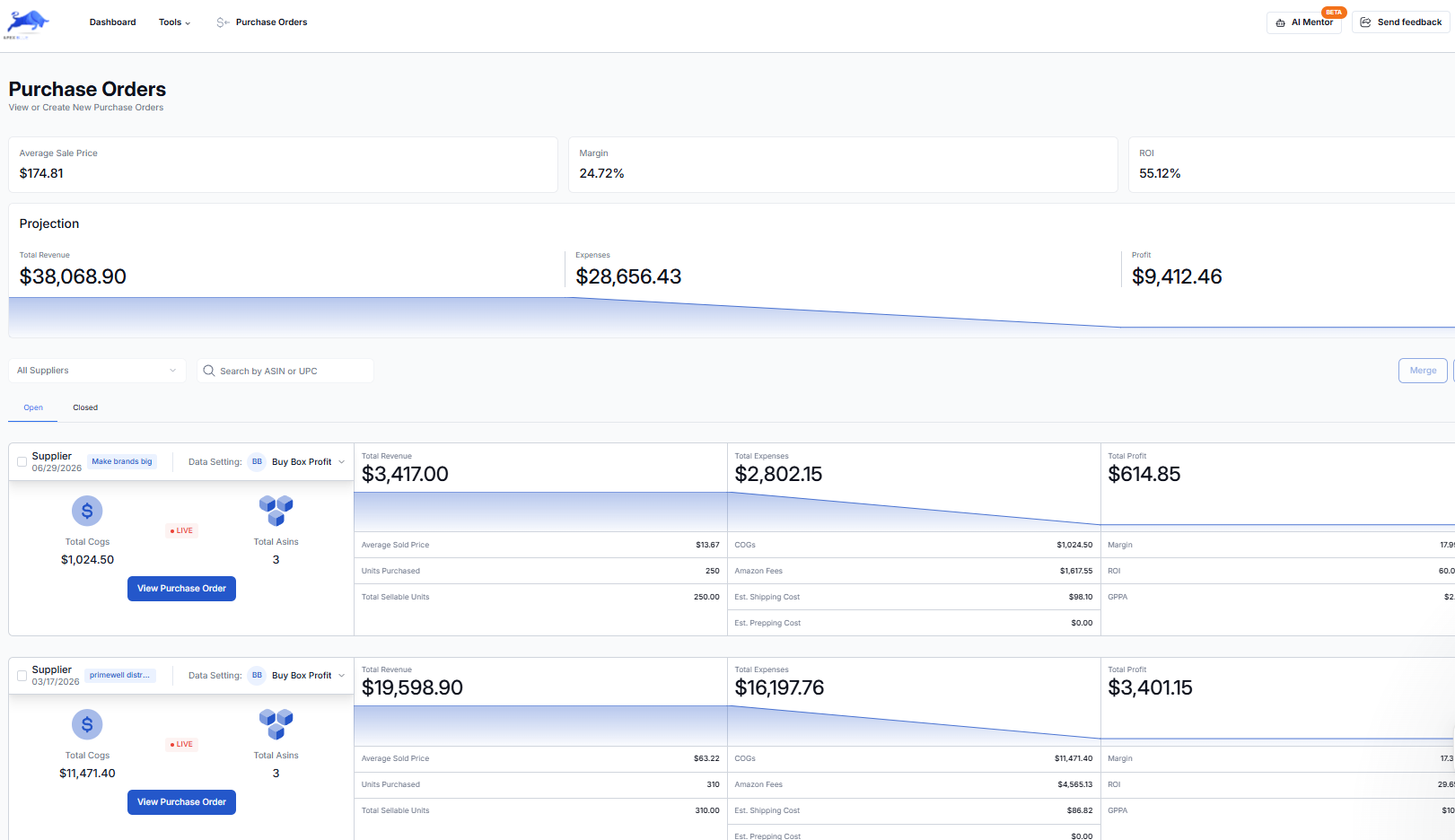
Every fee in this breakdown should be part of the same landed cost calculation covered in our profit margins guide. A product is not worth a purchase order because the sale price looks good next to the wholesale cost. It is worth a purchase order once referral fees, fulfillment fees, and a realistic assumption about storage time are all subtracted and a real margin, not an estimated one, remains.
Ready to put this into practice?
Apex Black, Blue, Green & Red connect sourcing, purchasing, and profit tracking into one suite. Start your 7-day free trial, no card charged until it ends.
Start Free TrialHow referral fees vary by category
The commonly cited 8 to 15 percent referral fee range hides significant variation by category, and checking the exact rate for your category before pricing a product matters. Categories like Consumer Electronics tend to sit at the lower end, while categories like Grocery and Beauty often sit in the middle to upper end of that range. Amazon publishes an official referral fee schedule by category, and it is worth checking directly rather than assuming a flat percentage across every product in your catalog, since even a few percentage points of difference changes the real margin calculation meaningfully at scale.
FBA fulfillment fee tiers explained
The FBA fulfillment fee is based on a product's size and weight tier, not its price, which means two products with very different sale prices but similar dimensions can carry the same fulfillment fee. This is why lightweight, compact products with a higher price point tend to produce stronger wholesale margins than bulky, low priced items, even when both look similar on a simple markup basis. Checking the exact size tier a candidate product falls into, rather than estimating, is a habit worth building into the same product evaluation pass as the Keepa check.
Frequently asked questions about Amazon FBA fees
What percentage of the sale price do Amazon fees typically take?
Combined referral and fulfillment fees typically consume 20 to 35 percent of the sale price for a wholesale product, though this varies by category, size, and weight. Building this range into your initial margin estimate, rather than discovering the real number after a purchase order, is the single habit covered throughout this guide.
Do Amazon FBA fees change seasonally?
Storage fees specifically increase during the Q4 peak season, reflecting higher demand for Amazon's warehouse space. Referral and fulfillment fees are generally stable year round, though Amazon does periodically update its full fee schedule, which is why checking current rates rather than relying on last year's numbers matters for any seller pricing new inventory.
How can I reduce Amazon FBA fees as a wholesale seller?
The most effective lever most sellers underuse is choosing products with favorable size and weight tiers relative to their price point during the sourcing stage, rather than trying to reduce fees after a product is already committed to. Beyond that, keeping inventory turning quickly avoids long term storage fees entirely, and bundling compatible products where appropriate can improve the fee to revenue ratio on individual units.
Ready to put this into practice?
Apex Black, Blue, Green & Red connect sourcing, purchasing, and profit tracking into one suite. Start your 7-day free trial, no card charged until it ends.
Start Free Trial